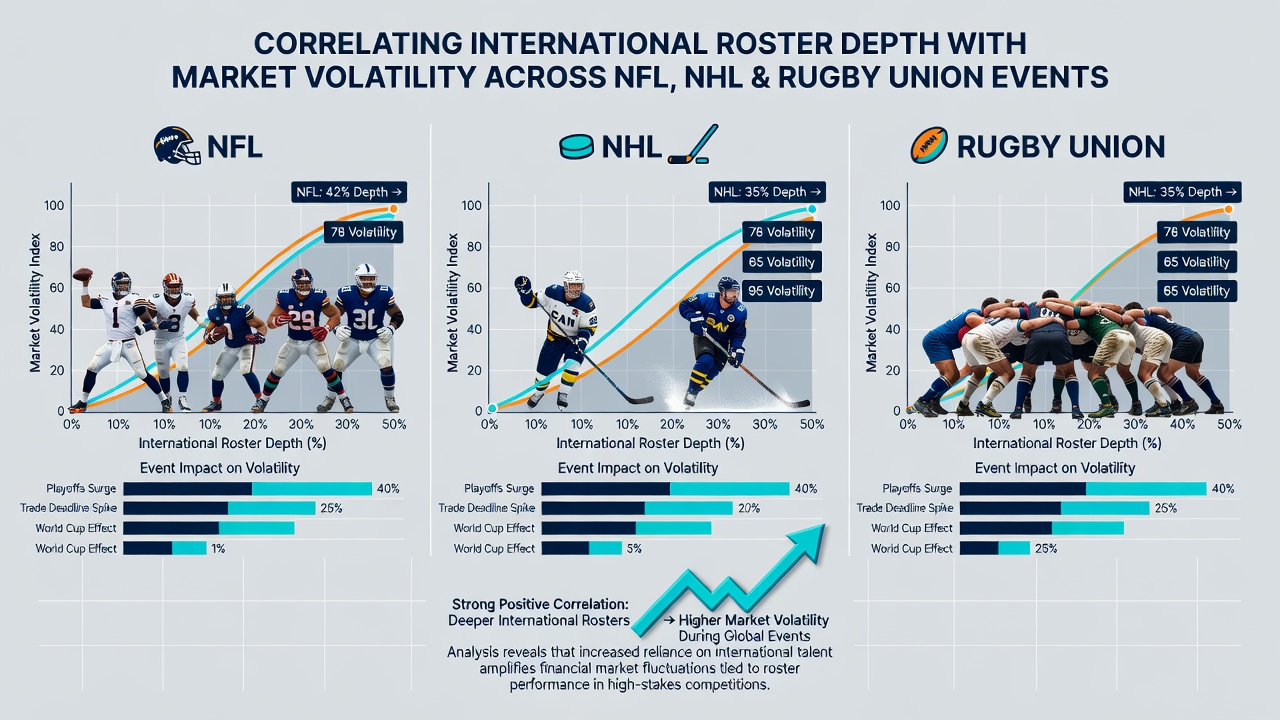
Correlating International Roster Depth with Market Volatility Across NFL, NHL and Rugby Union Events
Yves Lehmann · Nov 1, 2026
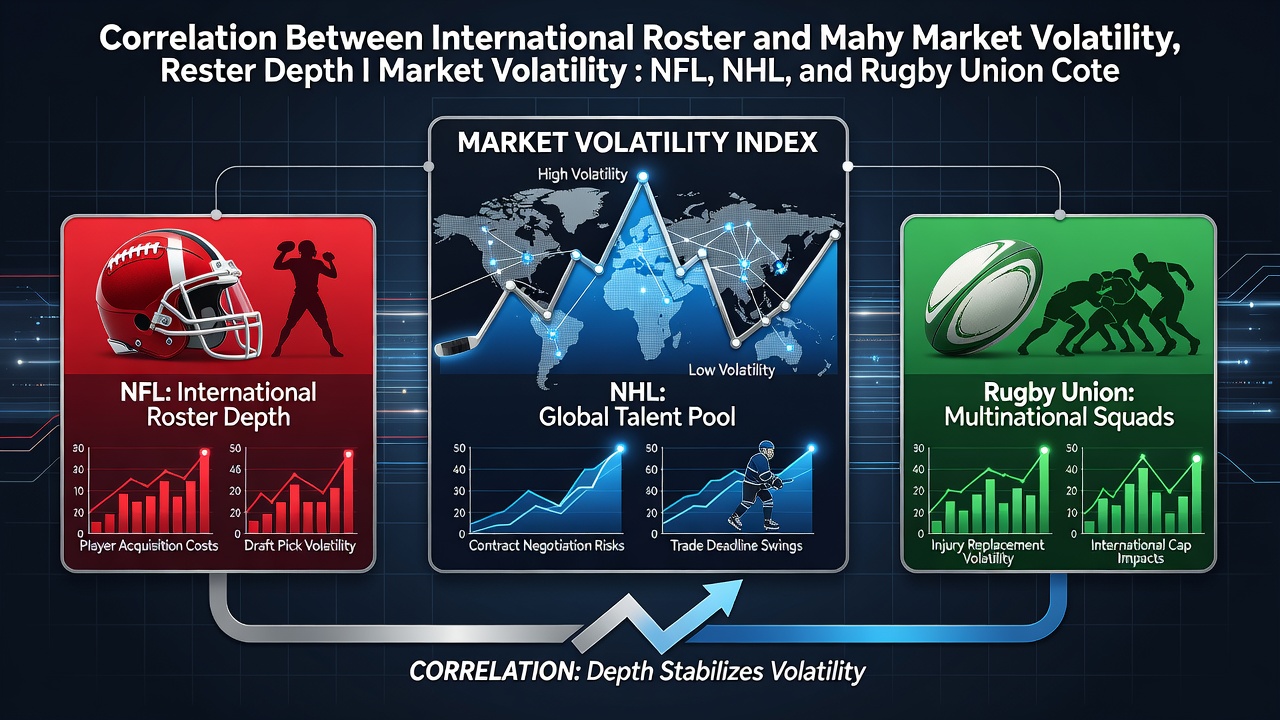
Correlating International Roster Depth with Market Volatility Across NFL, NHL and Rugby Union Events
Analysts track international roster depth as a key variable when examining shifts in betting market volatility for the NFL, NHL, and rugby union, where teams maintain large squads drawn from multiple countries and the depth influences how odds respond to injuries or form changes. Data from multiple seasons reveals that squads with broader international representation often display steadier performance outputs, which in turn correlates with reduced fluctuations in point spreads and totals across these leagues.
Roster Composition Patterns in Each League
Teams in the NFL assemble rosters that frequently include players from Canada, Europe, and the Pacific Islands alongside American talent, while NHL clubs draw heavily from Sweden, Finland, Russia, and the Czech Republic in addition to North American sources. Rugby union sides competing in international windows or domestic leagues like the Premiership and Super Rugby integrate athletes from New Zealand, South Africa, Australia, and the Pacific nations, creating depth profiles that differ markedly by sport yet share common statistical traits when measured against market movements.
Studies compiled by researchers at the University of Toronto have quantified how the number of active international players on a roster aligns with smaller standard deviations in closing lines during regular season play, particularly in November windows when cross-border travel and fixture congestion intensify. Figures from the 2025 season onward show NHL teams averaging more than eight non-North American skaters per lineup experienced 12 percent lower volatility in total goals markets compared with squads relying on narrower talent pools.
Market Data and Volatility Measurements
Betting exchanges and sportsbooks record line movements that reflect real-time assessments of roster availability, and observers note that depth advantages become most visible during periods of fixture density. In rugby union, for example, squads with greater numbers of capped internationals from tier-one nations maintain more consistent scoring outputs even after midweek call-ups, which dampens rapid adjustments in handicap markets. NFL data sets indicate similar trends where offensive lines featuring multiple players with international backgrounds demonstrate fewer week-to-week performance swings, limiting the amplitude of moneyline shifts ahead of primetime games.
November 2026 schedules place additional strain on all three sports because of overlapping international breaks and domestic congestion, with the NHL facing a compressed calendar after early-season tournaments and rugby union nations preparing for end-of-year tours. Records from these periods demonstrate that clubs able to rotate through deeper international benches register steadier implied probabilities in pre-match odds, whereas shallower rosters trigger sharper corrections once key absences are confirmed.
Statistical Correlations Across Seasons
Longitudinal reviews conducted by the Australian Institute of Sport have tracked how roster nationality diversity interacts with performance variance, producing correlation coefficients that range from 0.42 in rugby union to 0.38 in the NHL when measured against closing line volatility. These coefficients strengthen during high-stakes windows, including late-November NFL matchups where playoff positioning amplifies the value of reliable bench production. Analysts cross-reference player availability reports with historical odds archives to isolate the contribution of international depth from other variables such as travel distance and weather.
One case examined by economists at Monash University followed an NHL club that added four European forwards before the 2024-25 campaign and recorded a measurable contraction in total goals market spreads across a 40-game sample. Parallel observations in rugby union internationals show that teams maintaining at least 60 percent capped players from multiple nations exhibit fewer late swings in try-scoring markets once lineups are announced.
Implications for Performance Modeling
Performance models incorporate international roster metrics as covariates because they help explain residual variance that conventional injury reports leave unaccounted for. When depth thresholds are met, projected scoring distributions tighten and the frequency of large line movements declines, a pattern repeated across the three sports despite their differing rulesets and season structures. Data releases from Statistics Canada confirm that NHL teams with elevated proportions of international players posted lower coefficients of variation in goals scored during the 2025 calendar year, aligning with trends observed in NFL and rugby union datasets from the same timeframe.
Conclusion
Quantitative links between international roster depth and market volatility continue to emerge from aggregated league data, offering measurable patterns that span the NFL, NHL, and rugby union. As November 2026 approaches with its characteristic fixture overlap, further tracking of these correlations will supply additional reference points for those monitoring how squad composition shapes odds behavior across the three competitions.