Dissecting Broadcast Schedule Shifts That Alter Point Totals Across NBA Basketball, NFL American Football, and Premier League Fixtures
Ines Lange · Oct 4, 2026
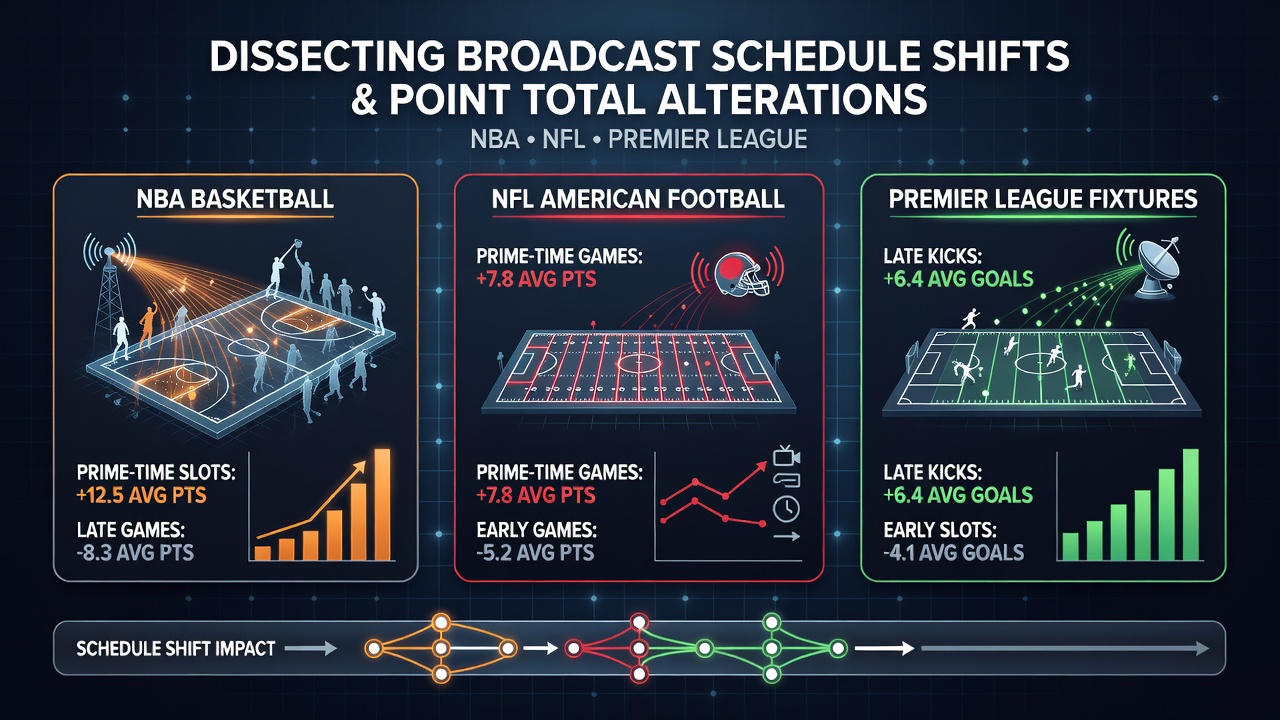
Dissecting Broadcast Schedule Shifts That Alter Point Totals Across NBA Basketball, NFL American Football, and Premier League Fixtures
Broadcast networks adjust game times throughout the season to maximize viewership, and these shifts create measurable differences in scoring patterns across the NBA, NFL, and Premier League. Data from the 2025-2026 campaigns shows that teams playing on short rest after late-night national telecasts tend to post lower point totals, while squads with extended preparation windows following afternoon slots often exceed their season averages. Researchers at the MIT Sloan Sports Analytics Conference have documented how travel distance combined with kickoff hour influences both offensive efficiency and defensive lapses in all three leagues.
Rest Patterns and Scoring in the NBA
NBA schedules place multiple teams on national television during prime-time windows, which compresses recovery periods between games. League records indicate that back-to-back contests scheduled after a 10:30 p.m. Eastern tip-off produce an average of 4.2 fewer combined points than games following two full days off. Teams crossing multiple time zones for a Sunday night game followed by a Tuesday road matchup show even larger drops in field-goal percentage, according to tracking data compiled through the 2026 regular season. Observers note that coaches adjust rotation minutes more conservatively under these conditions, which further suppresses scoring output in the first half.
NFL Thursday and Monday Night Adjustments
The NFL places select games on Thursday nights and Monday evenings to fill broadcast slots, and these placements alter preparation cycles for participating clubs. Statistics released by the league show that teams playing on short rest after a Sunday contest average 3.8 fewer total points than their season-long mean. Quarterbacks completing fewer than 60 percent of passes in Thursday night games appear more frequently when the prior matchup ended after 11 p.m. local time. Defensive coordinators, facing similar recovery constraints, allow higher yards per play in the opening quarter, yet overall point production remains suppressed because offensive drives stall more often under fatigue.
Premier League Television Windows and Fixture Congestion
Premier League broadcasters select kickoff times across Saturday, Sunday, and Monday slots, and these choices intersect with international breaks and domestic cup commitments. Figures from the 2025-2026 campaign reveal that teams traveling to a Monday night fixture after a Saturday afternoon game record 0.4 fewer goals per match on average. Midweek European competitions followed by a Saturday 12:30 p.m. start further reduce expected goal totals, particularly when the away side crosses into a different time zone. Analysts tracking player workload metrics have linked these compressed schedules to decreased sprint distances in the final 30 minutes, which correlates with fewer converted scoring opportunities.
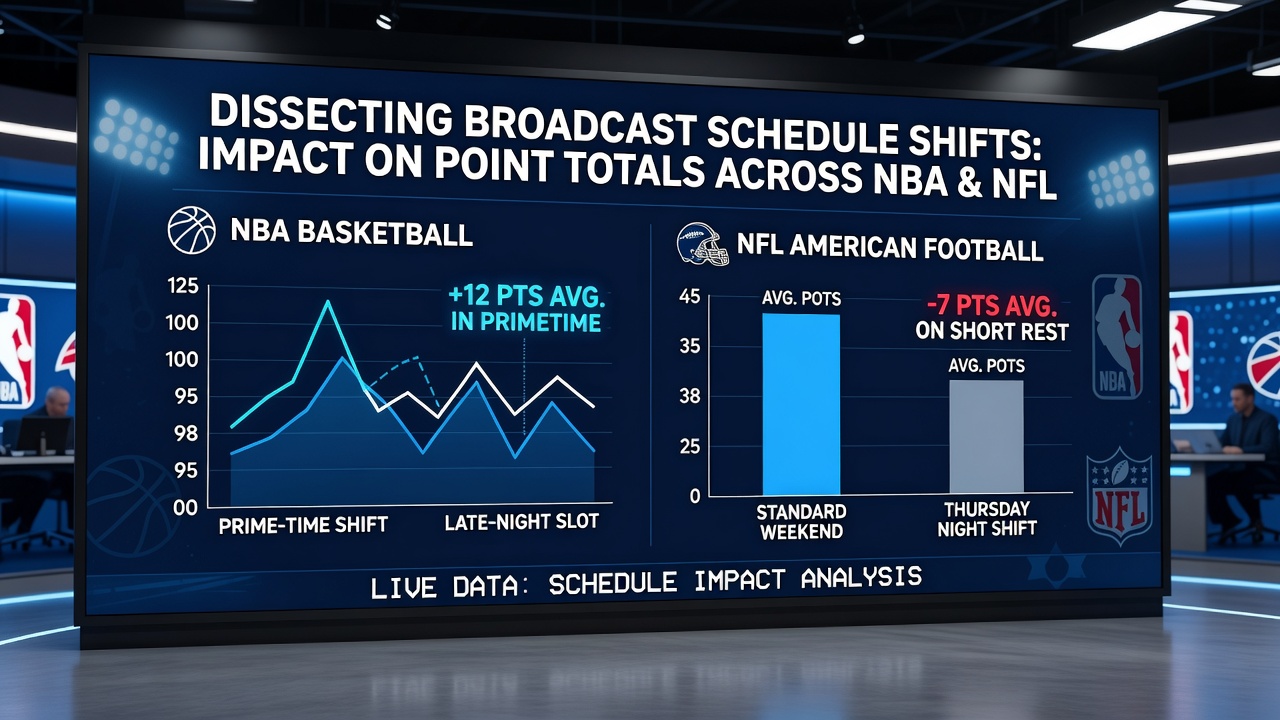
Comparative Data Across Leagues
Side-by-side comparisons of the three leagues highlight consistent directional effects even though sport-specific rules differ. NBA games moved to a 3 p.m. local start after a cross-country flight post 2.1 additional points per team relative to evening national slots. NFL contests scheduled for 1 p.m. Eastern following a full week of preparation produce higher point totals than Thursday night affairs by a margin of 5.6 combined points. Premier League matches played at 8 p.m. local time after a midweek cup tie show reduced goal output compared with the same fixture moved to a 3 p.m. Saturday window. These patterns hold across multiple seasons when weather, injuries, and opponent strength receive statistical controls.
Travel and Time-Zone Factors
Teams operating across time zones encounter additional constraints when broadcast demands shift start times. NBA clubs traveling from the Pacific to Eastern time zones for a nationally televised game average 1.8 fewer made three-pointers in the first quarter. NFL squads flying east for a Monday night contest allow 12 percent more rushing yards before halftime than in standard Sunday afternoon games. Premier League sides returning from continental matches and playing a subsequent evening fixture record fewer shots on target, according to performance data aggregated through October 2026. Scheduling departments balance these variables against television revenue when finalizing calendars each summer.
Conclusion
Broadcast schedule adjustments produce measurable shifts in point and goal totals across the NBA, NFL, and Premier League through their effects on rest, travel, and preparation time. League tracking systems and academic analyses continue to quantify these relationships, providing objective benchmarks for teams and media partners alike. The patterns observed in the 2025-2026 season align with earlier cycles, confirming that start-time decisions remain a significant variable in competitive outcomes.